What Is a Fire Hydrant? A Complete Beginner’s Guide
What Is a Fire Hydrant? A Complete Beginner’s Guide
Fire hydrants might look like simple roadside objects, but they are actually among the very important mechanisms for fire-fighting for public safety. When a fire breaks out, every second counts, and that’s where fire hydrants come into play and help to provide immediate access to a pressurized water source, allowing firefighters to fast and effectively control and extinguish fires. Without hydrants in place, fire departments would depend only on water carried in trucks, which can run out fast and hardly limit their firefighting capabilities.
In urban areas, hydrants are part of a networked water system designed to ensure a continuous and strong flow of water whenever required. Their strategic arrangement in cities and communities provides that no building is too far from a potential water source. Moreover, fire hydrants are essential for minimizing fire damage, saving lives, protecting property, and maintaining overall public safety.
The fire hydrant’s basic functions are flushing water lines, testing water pressure, and helping utility crews perform maintenance tasks beyond any emergency. Hydrants act as a frontline defense against fires and a universal mechanism for water management in the community.
Evolution and History of Fire Hydrants
Fire hydrants have an interesting history that stretches back to the 18th century. The earliest known hydrants were underground valves installed in European and Asian cities to provide water access during any emergencies. However, it wasn’t until the 19th century that the above-ground, pillar-style hydrants those standard red or yellow poles we see today became standard.
Back in the day, these were known by different names fireplugs, Johnny pumps (a New York City term), and firecocks. Initially, hydrants were purely mechanical devices, and their construction depended on local requirements and available technology. Over time, as cities developed and infrastructure improved, fire hydrants evolved to have better valve systems, stronger materials, and higher pressure capabilities.
One important milestone in fire hydrant history was the invention of the dry barrel hydrant, designed for cold climates where freezing temperatures could make traditional hydrants useless. Today, hydrants are manufactured under rigid national and international standards, providing consistent performance no matter the area.
What Exactly Is a Fire Hydrant?
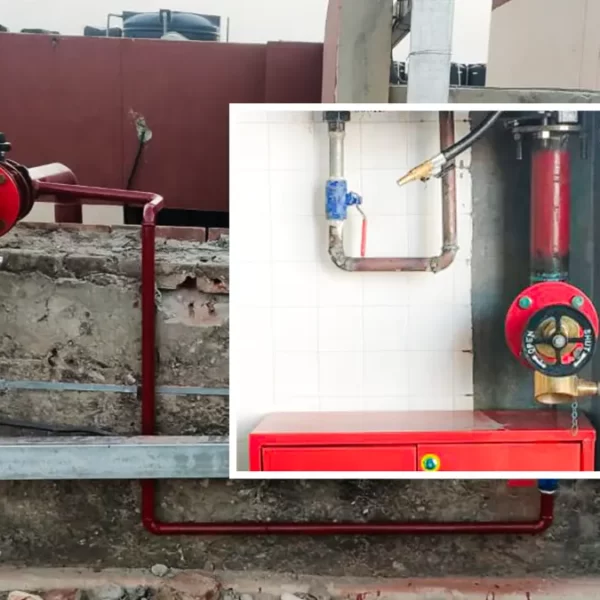
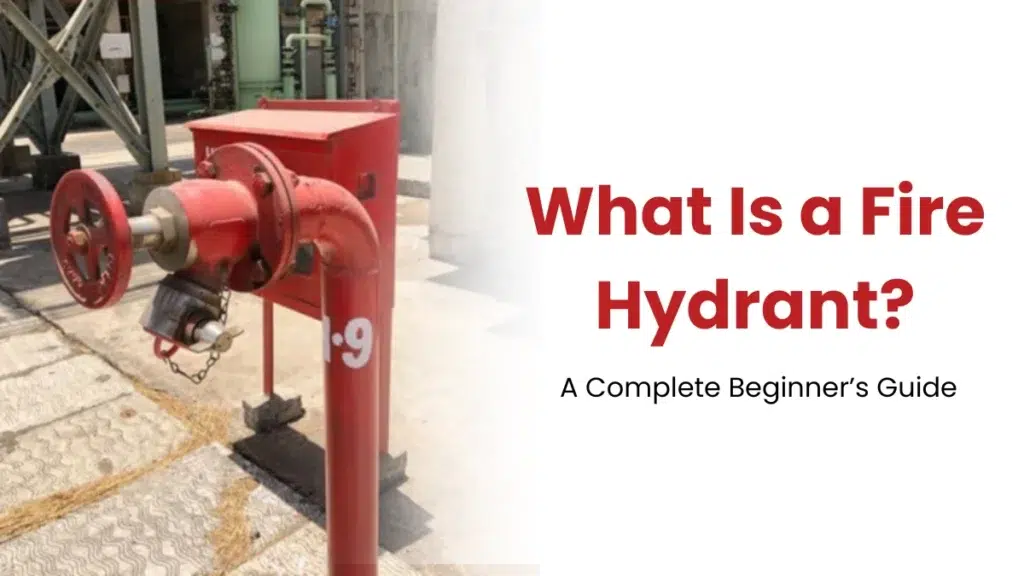
In an emergency, a fire hydrant is a device that allows firefighters to get a source of water nearby. In simple terms, it is a controlled outlet that connects to a deep underground water main. Hydrants can be placed below with access covers marked “FH” or “Fire Hydrant,” or they can be exposed as above-ground posts (known as pillar-type hydrants).
Firefighters connect hoses to the hydrant’s outlets as soon as they get to the fire scene. Pressurized water from the water main enters a fire engine through the hose or flows straight toward the fire after the valve is released. One or more outlets with standardized connectors may be placed in the hydrant, depending on its design.
Hydrants are helpful not only in emergencies but also in guiding people to the location of water mains. They provide access places for water utility employees to monitor flow rates and flush pipes. A fire hydrant is an all-around multipurpose safety feature that is essential to emergency response systems and municipal facilities.
How a Fire Hydrant Works?
Step-by-Step Usage During a Fire Emergency
Here’s how a fire hydrant gets used in real-world scenarios. First, when firefighters arrive at the scene, one of the team members immediately identifies the nearest hydrant. They quickly remove any protective caps covering the hydrant’s outlets. A fire hose is then securely attached using either threaded connections or specialized connectors like Storz fittings.
Next, the firefighter opens the valve using a special wrench, allowing water under pressure—usually around 350 kilopascals or 51 psi—to flow. This water travels through the hose to a fire engine or directly to a nozzle if needed immediately. If connected to a fire engine, onboard pumps can increase pressure and split the stream into multiple hoses for greater reach and control.
Timing is critical. A good fire crew can complete this entire process in under a minute. Firefighters are trained to operate hydrants safely, wearing full protective gear including gloves, boots, and helmets with visors. This is crucial because malfunctioning hydrants or sudden pressure surges can be dangerous.
Fire NOC in India – A Complete Guide (Requirements, Process & Documents)
Components That Enable Functionality
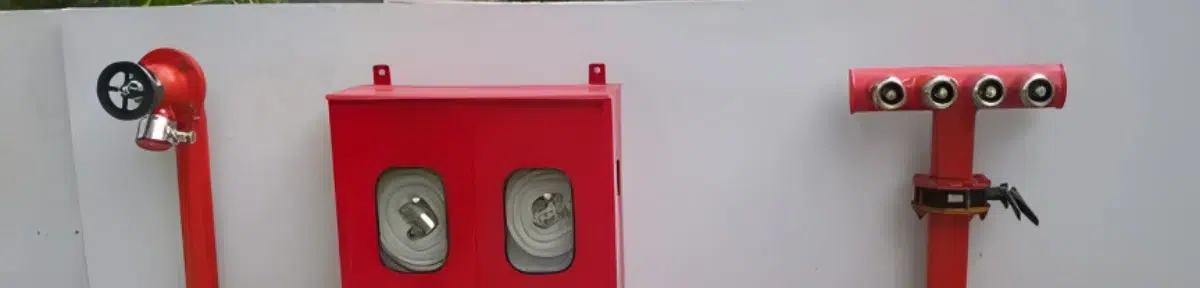
The functioning of a fire hydrant depends on several key components:
- Outlet Nozzles: Where hoses are connected.
- Operating Nut/Stem: Used to open and close the valve.
- Main Valve: Controls water flow from the main supply.
- Drain Valve: Prevents water from freezing in dry barrel hydrants.
- Bonnet and Barrel: The outer casing that protects internal parts.
Dry barrel hydrants are best for colder climates since the main valve resides under the frozen line. Wet barrel hydrants, on the other hand, are ideal for warmer regions since they keep water above ground.
Pressure Dynamics and Hose Connections
Water pressure and flow rate are the basic factors in connecting a hose to a hydrant. Although they need strong hoses and connectors, high-pressure hydrants provide a powerful water flow. Hydrants can produce a “water hammer,” or an abrupt spike in pressure if they are opened too quickly. This could harm nearby equipment or pipes.
Hydrant valves are made to only work fully on or fully off since slowing them might cause leaks or erosion under the surface. For enhanced control, firefighters occasionally add gate or butterfly valves to hydrant exits without cutting the main flow. These connectors, which are particularly frequent on huge “steamer” outlets seen in American cities, can have a diameter of up to 12 inches.
Training and proper handling are important. When working with old or rusted fire hydrants, firefighters need use caution since they may fail under high pressure, which could cause accidents.
Types of Fire Hydrants
Wet Hydrants: Structure and Ideal Locations
Wet hydrants are for those areas where freezing temperatures are not a concern. These hydrants are linked directly to the municipal water line, and water is present in the hydrant barrel at all times. This type of hydrant design allows firefighters to access water immediately.
The structure of a wet hydrant includes an above-ground barrel housing multiple outlets for hoses, a valve stem for opening and closing the water flow, and a permanent link to the pressurized water main. Because the hydrant is always charged with water, there is no delay in accessing the water supply during an emergency.
Wet hydrants are cost-effective and easier to install compared to dry hydrants. Maintenance is also simpler, as all moving parts are located above ground.
One important drawback is being exposed to frigid temperatures. The hydrant may freeze and become useless if the temperature falls below freezing and the water inside the barrel isn’t drained or heated. Because of this, wet hydrants are rarely utilized in colder regions where winter poses an important danger to operational reliability.
Dry Hydrants: How They Work in Cold Areas
Dry hydrants are designed for cold climates where freezing is a main concern. This system uses a drain mechanism and a valve. A firefighter connects the line and opens the valve on top of the hydrant to access water when they need it. Water can rise into the hydrant and drain through the hose connection as a result of this movement, which raises a rod connected to a valve seat below the ground. To stop leaks into the earth, a drain valve instantly closes.
However, in colder climates where wet hydrants would be dangerous or useless, the additional complexity is worth it. Dry hydrants are essential to the continuous functioning of fire services in cities like Chicago, Toronto, and Berlin during the year.
Comparison Between Wet and Dry Hydrants
The differences between wet and dry hydrants to better understand their specific uses and design logic.
Wet hydrants are the best choice for warm climates since they are easy to maintain and provide quick access. Even though they need more work, dry hydrants are essential in areas where freezing pipes can become a serious problem during cold winters.
A fire department’s hydrant system choice is often affected by the local firefighting needs, infrastructure budgets, and environment. Both systems have advantages and disadvantages, but they both work toward the same end: supplying regular water supply to put out fires and save lives.
Fire Hydrant System Standards and Regulations
Fire hydrant systems must conform to a number of national and international standards if they are to be safe and effective. These rules include everything from location and pressure limits to design and installation. Let’s explore some of the most important standards and their contents:
National and International Standards
|
Feature |
Wet Hydrant |
Dry Hydrant |
|
Water Presence |
Always contains water above ground |
Water remains below ground |
|
Ideal Climate |
Warm or temperate areas |
Cold or freezing regions |
|
Installation Cost |
Cheaper and easier |
More Expensive and Complex |
|
Maintenance |
Simple, quick access to components |
Requires more effort and tools |
|
Risk of Freezing |
High |
Very low due to underground design |
|
Response Time |
Faster, immediate water access |
Slight delay to draw water |
|
Durability |
Less resistant to freezing-related wear |
More robust in harsh climates |
In the World, there are several organizations have laid down guidelines that must be followed:
- NFPA 24 (USA): This standard by the National Fire Protection Association governs the installation of private fire service mains and their appurtenances.
- BS 9990 (UK): This British Standard provides the code of practice for non-automatic fire-fighting systems in buildings.
- IS 3844 (India): Specifies guidelines for the installation and maintenance of internal fire hydrants and hose reels.
The necessary pressure levels, hydrant spacing, pump performance, and other details can be found in each of these standards. There is a greater chance of system failure in an emergency and legal repercussions for noncompliance.
Spacing and Placement
Standards usually require that fire hydrants be set within 100 to 150 meters of any building or access point. This provides that firefighters can reach a water source without wasting time or hose length. In densely populated urban areas, hydrants may be placed even closer together.
In high-risk areas like industrial parks or chemical zones, spacing may be even tighter, with extra hydrants or foam-based systems installed for added protection.
Pump and Reservoir Sizing
Hydrant systems must be connected to a pump that can provide the right pressure and flow rate. Most standards need the fire pump to maintain a minimum pressure of 40 psi (pounds per square inch), with a maximum sometimes surpassing 250 psi depending on the structure size and fire risk type.
Reservoirs providing the hydrant system must have enough water to fight a normal fire for a minimum of 30 to 60 minutes, again depending on the risk type of the area.
Fire Risk Classifications
Areas are normally divided into different fire risk types:
- Low-risk: Residential areas with minimal flammable materials.
- Moderate-risk: Commercial zones like shopping malls or office complexes.
- High-risk: Industrial areas, fuel storage zones, and chemical processing facilities.
Each risk category needs specific hydrant designs, spacing, and water supply capabilities to provide complete fire protection coverage.
Protect What Matters Most — Schedule Your Fire Safety Consultation Today!
For advanced fire Fighting systems installation, Damia Global Services has you covered. Don’t wait for an emergency — call us now or book online to safeguard your space with certified fire protection professionals.
👉 [Info@damiaglobalservices.com] | 📞 [+91-7009252789]
Conclusion
Fire hydrants act as silent protectors of public safety and are much more than just roadside embellishments. These devices are essential for protecting our communities from destroying fires, from providing a quick supply of water in an emergency to helping with regular maintenance of municipal water systems.
understanding what a fire hydrant is, how it works, and how it fits into larger fire protection systems helps us understand how important it is. From the fire pumps and underground pipe system to the valves, hoses, and hydrant heads, every part is literally made to work well under pressure.
The next time you see a bright red fire hydrant on the sidewalk, keep in mind that it’s more than simply a metal post; in an emergency, it’s an important lifeline. As a firefighter, city planner, business owner, or homeowner, you can make a difference to safer areas by being aware of and respectful of the hydrant system.
https://www.youtube.com/embed/cveuVXqrYq4https://www.youtube.com/embed/vouWAx-VWhghttps://www.youtube.com/embed/aMi7iXD0l9I